Exterior Insulation Options in Edmonton
Exterior insulation is becoming increasingly popular in the Edmonton area, and for good reason! Pairing your siding renovation with an upgrade in the thermal value of your walls means added comfort year round, and avoiding the need to tear open your interior walls to do it.
Unfortunately, there are some real risks when installing exterior insulation. Part of that is going to come down to how the products are installed and detailed (check out this article here for more information on that), but the other consideration is the type of insulation being used. While adding the highest R value would seem to be the simple choice for getting the most out of your exterior insulation, pure R value on paper might not be the most accurate reflection of actual value on your home.
Below we’ll list some of the common types of exterior insulation, and why we would/would not recommend them for your Edmonton home.
Polyiso Insulation
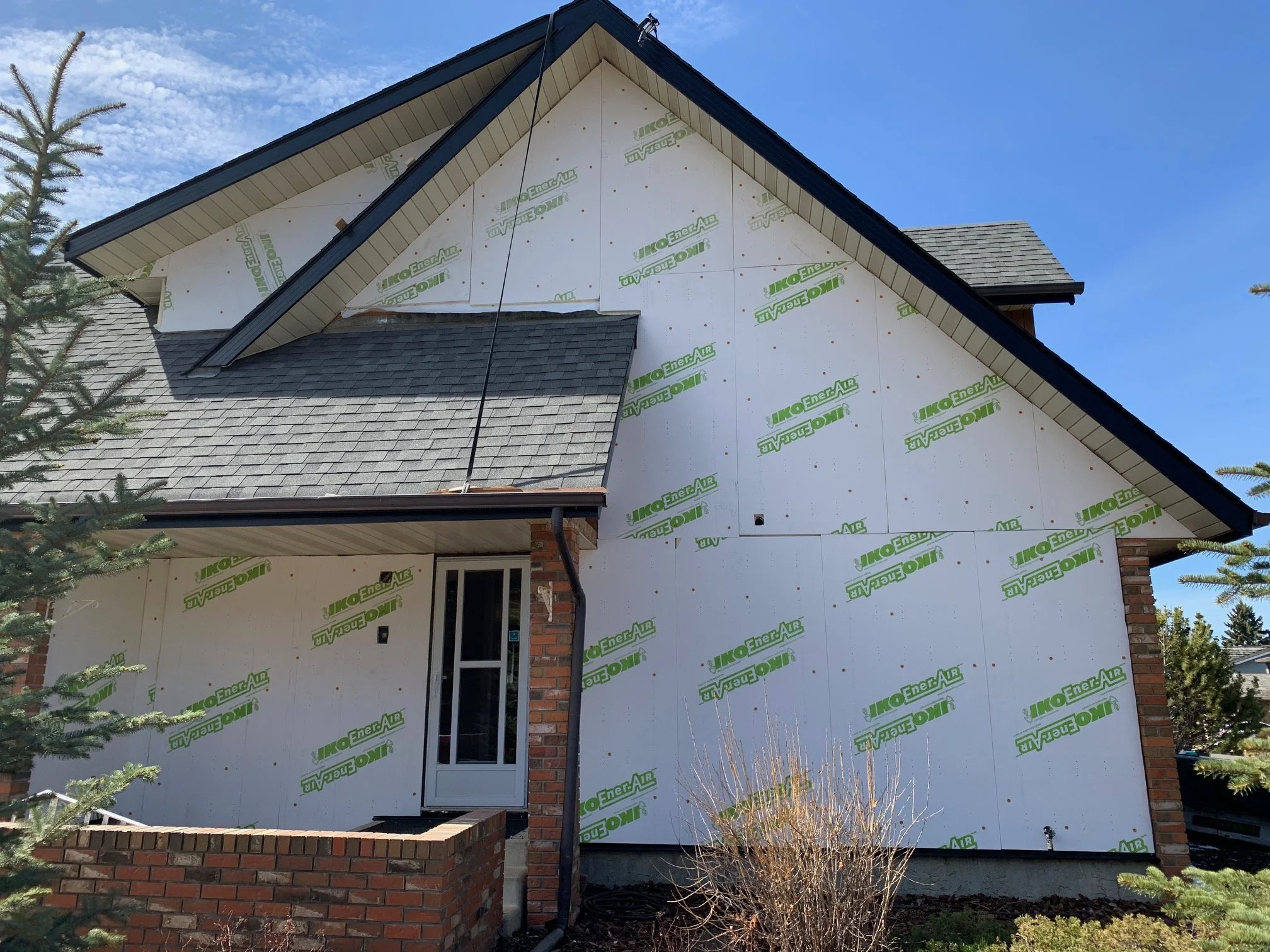
Polyiso insulation is a rigid foam insulation product that has the highest R value per inch (6) of any exterior insulation we’ve encountered. However, that R value does come with two conditions that do limit the potential of some of that R value. The first is that polyiso does achieve this R value with a gas infusion, not dissimilar to argon in a window, and that over time that gas will leak out. When it does, the overall R value of the product is diminished. The second, is that it does not perform at full R value in cold weather.
With these considerations, the R6 per inch on the marketing materials for the products aren’t a perfect representation of their performance. However, products like IKO EnerAir (in the photo above) have proven to be a very effective means of helping keep our clients’ homes warmer in the winter and cooler in the Summer.
One thing to watch out for when selecting a polyiso insulation is the face of the product. The photo above shows the IKO EnerAir product which has no cover, but conversely something like IKO’s EnerFoil product has an aluminum foil face. An aluminum foil face provides zero breathability for the insulation, thus locking in any moisture that builds up or finds its way between the insulation and your sheathing. The lack of permeability is a significant concern, and if not detailed properly, could directly lead to rot and damage to your sheathing and studs.
Enerspan Insulation
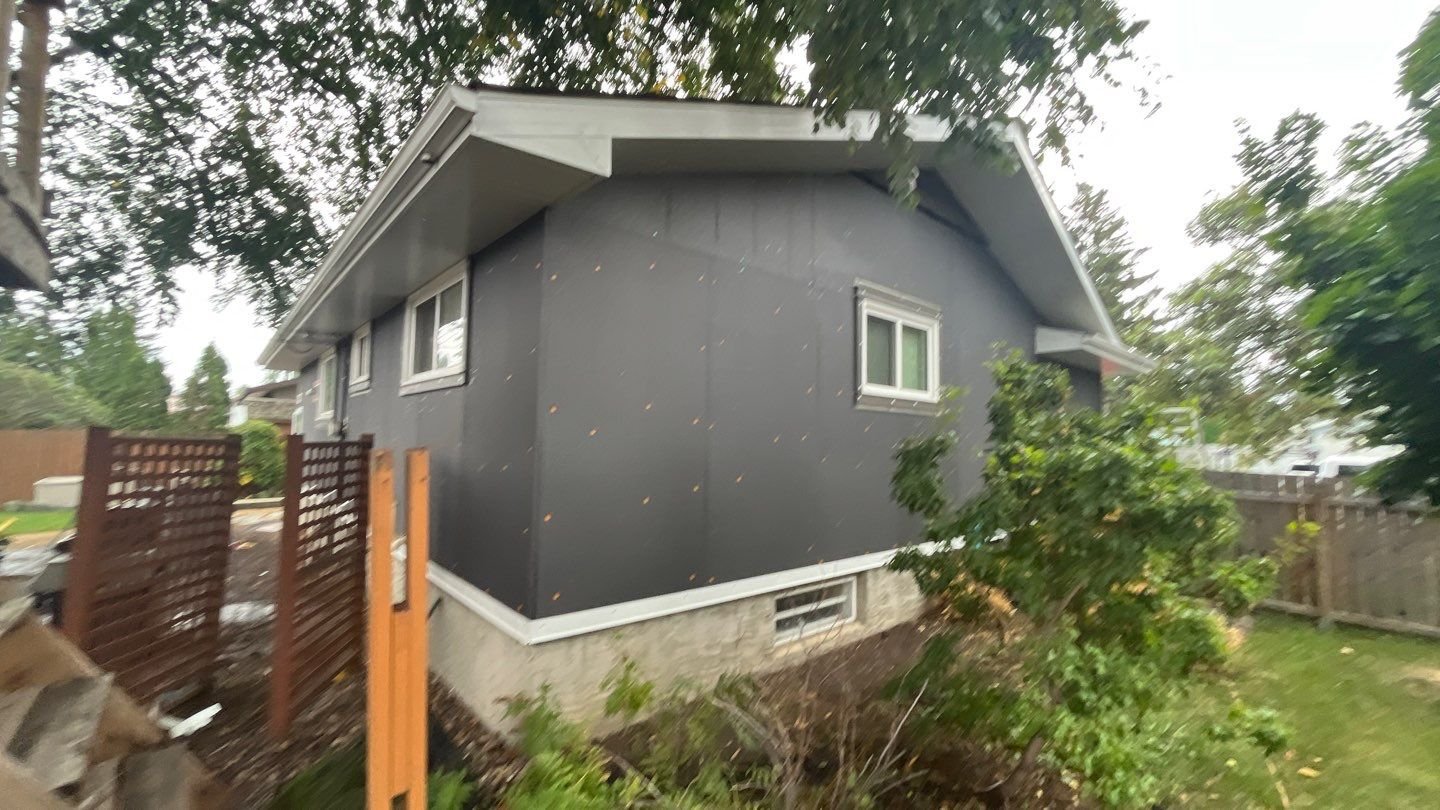
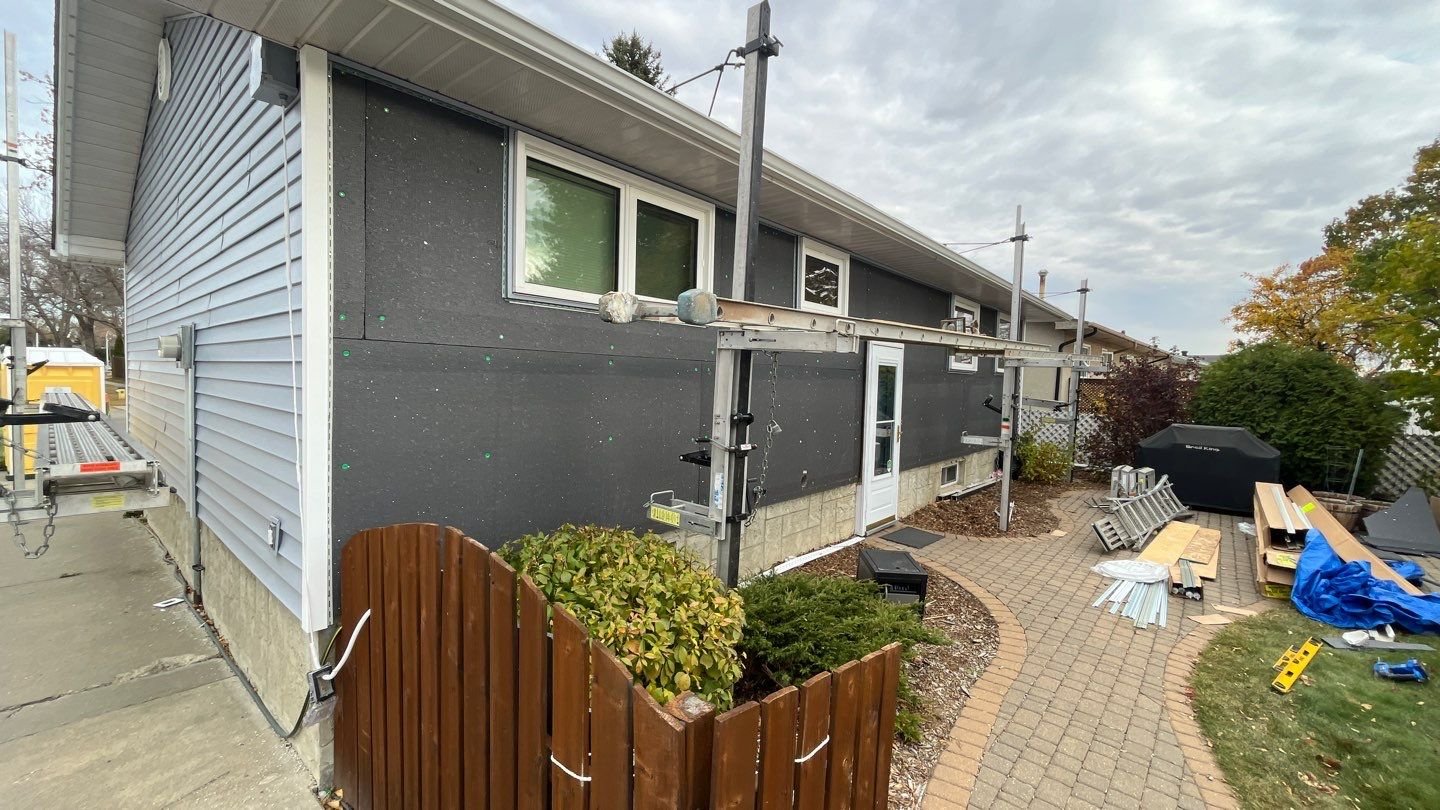
A locally made GPS (graphire polystyrene) product, Enerspan is our recommended product for exterior insulation when R value is the goal. Enerspan provides an R4.7 per inch, which is lower than what EnerAir and EnerFoil offer, but it does not lose thermal value in cold temperatures and holds its R value over time. As such, its lower R value (on paper) relative to polyiso options is not realtiy, and in fact this will help keep the home warmer during cold snaps.
Furthermore, Enerspan has a higher permeability rating - no aluminum foil face to worry about, and a stronger ability to let moisture out. s such, Enerspan is our recommendation for R value when it comes to exterior insulation products locally.
Rockwool
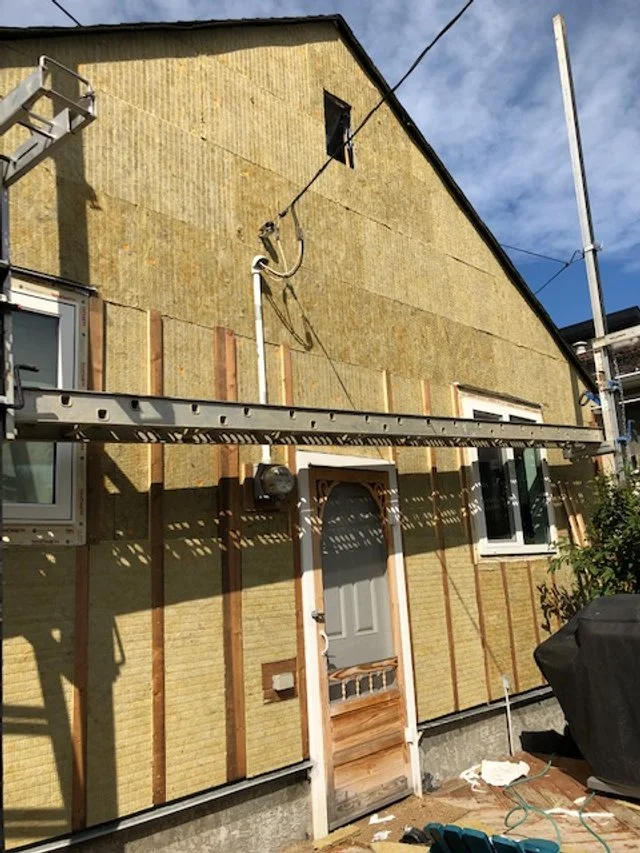
Another popular exterior insulation option is Rockwool, and it’s one we really love. While Rockwool doesn’t have as high an R value as Enerspan (Comfortboard has an R4.2 to Enerspan’s R4.7 per inch), it has a higher permeability rating and a couple other really nice benefits. Rockwool also brings with it top of the line sound dampening and non-combustibility, something polystyrene and polyiso products can’t offer.
While these features are nice for any home, they aren’t generally the main motivator for exterior insulation - at least on our projects. For this reason, and because of Rockwool’s higher cost relative to Enerspan, it isn’t something we use as often.